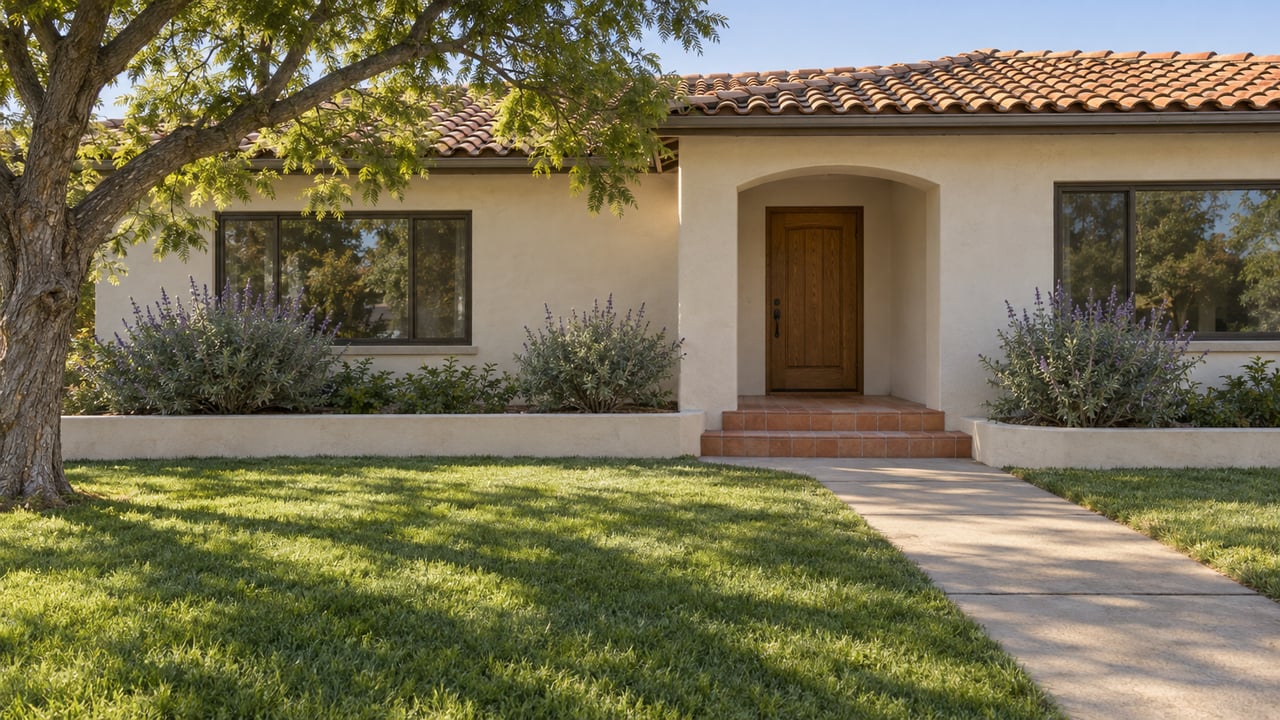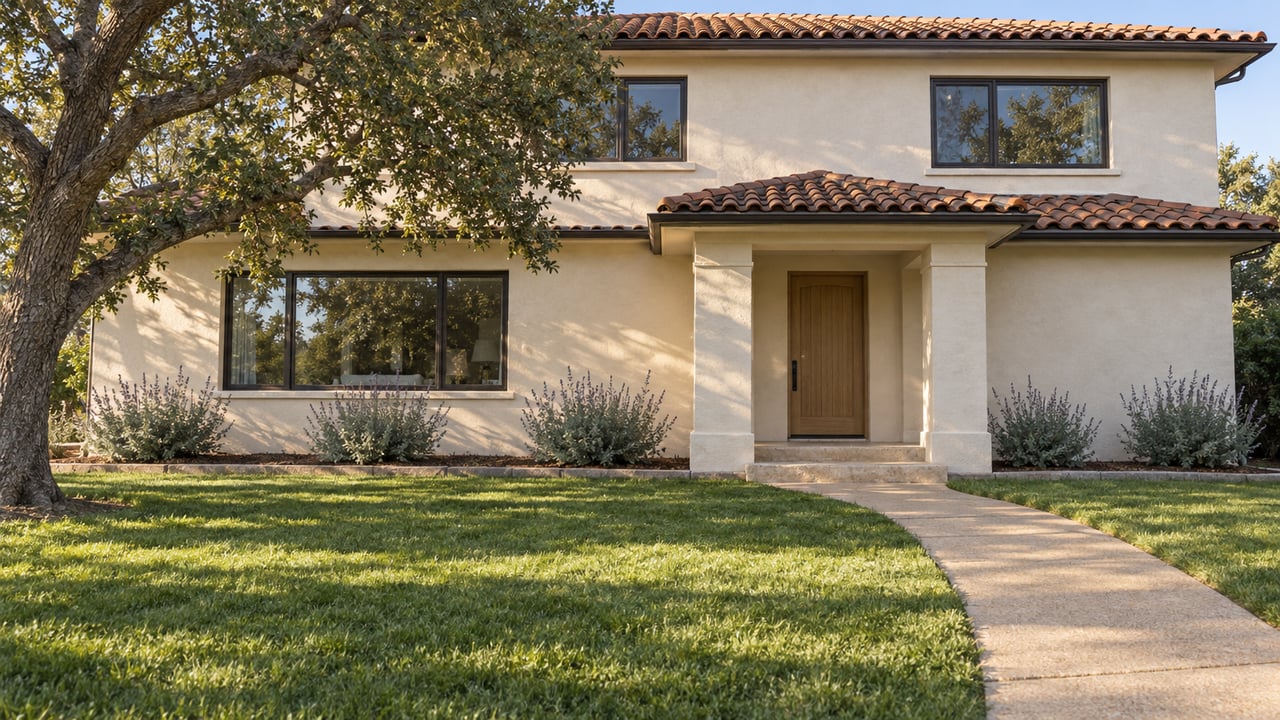
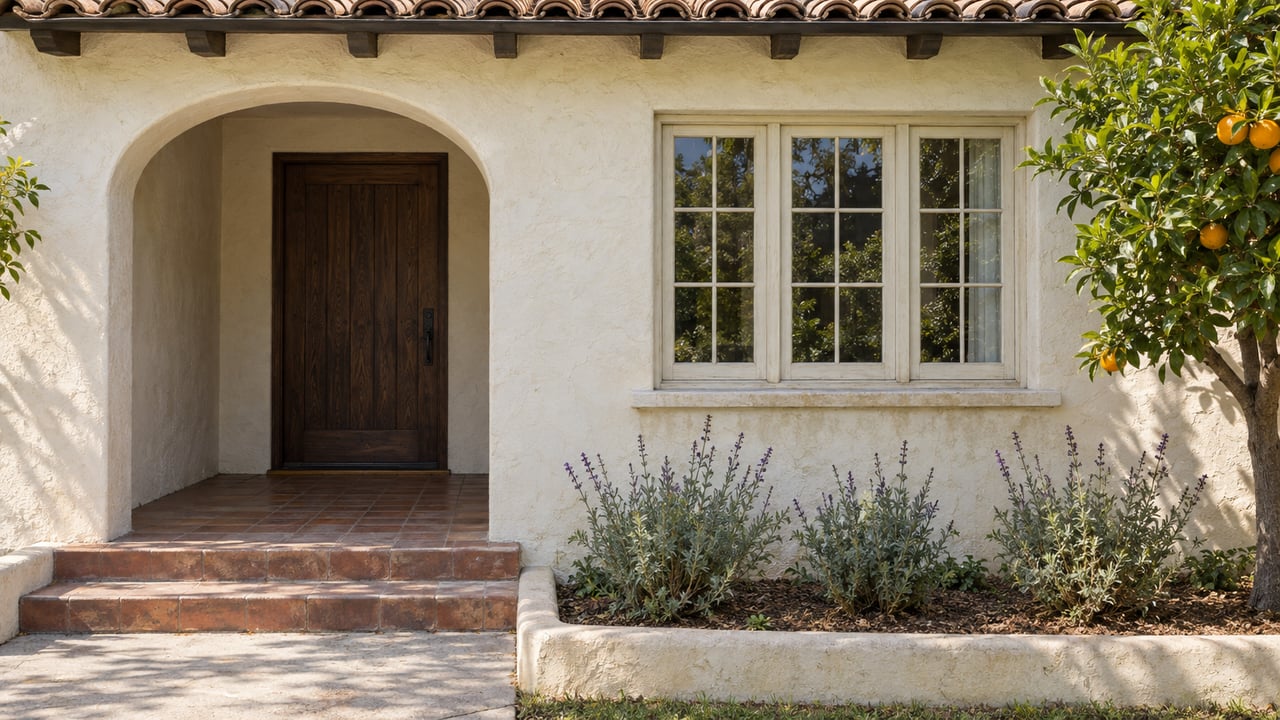
If you are buying or selling a home on Richman, Malvern, Drake, Golden or Union avenues this fall, the rules for what can be built on that lot are about to change. The City of Fullerton is moving to rezone Lower Golden Hill from R-1-7.2 to R-1-7.2P, which would make the neighborhood a Residential Preservation Zone. The district covers 80 properties. Under the proposed standards, keeping the existing house allows more floor area than tearing it down and starting over. Once the zone takes effect, the house would carry more of a Lower Golden Hill property's value, and the lot's development potential would carry less.
That changes how an offer gets priced, how a long-held family home gets prepared for sale, and how a buyer with remodeling plans compares this neighborhood with the rest of Fullerton.
Where the vote stands this week
On October 6, 2026, the City Council held a public hearing and introduced Ordinance No. 3359 for first reading on a 3–1 vote, with one member opposed and one absent. A public notice published in the Orange County Register and reproduced on NoticeRegistry said the council would consider adopting the ordinance on Tuesday, October 20, 2026, at 5:30 p.m. The Planning Commission had already recommended approval 4–1 at its June 10, 2026 meeting.
If you are in escrow or about to make an offer, ask the City Clerk's office at 303 West Commonwealth Avenue for the outcome of the October 20 meeting and the ordinance's effective date. The notice that set the adoption date does not give an effective date.
The area is described in the June 10 Planning Commission staff report as bounded by Richman Avenue on the east, West Leland Avenue on the west, Glenhaven Avenue on the north and West Malvern Avenue on the south. It covers the 500 block of West Malvern, the 600 to 800 blocks of North Richman, the 600 blocks of North Drake and Golden, and the 500 and 600 blocks of West Union. There are 83 residential units on 80 properties.
The floor-area math that changes what a lot is worth
Under ordinary R-1-7.2 zoning, a house can cover up to half the lot in habitable floor area. The preservation zone lowers that cap, and it lowers it further if the existing home is removed. The staff report uses a 7,000-square-foot lot to illustrate the standards in Fullerton Municipal Code §15.17.060:
| Scenario on a 7,000 sq ft lot | Maximum floor area ratio | Maximum habitable floor area |
|---|---|---|
| Standard R-1-7.2 zoning | 50% | 3,500 sq ft |
| R-1-7.2P, existing home preserved | 40% | 2,800 sq ft |
| R-1-7.2P, existing home not preserved | 35% | 2,400 sq ft |
Picture a buyer who plans to scrape a 1920s cottage and build something larger. On that lot, a rebuild would now top out about 1,100 square feet below what the old zoning allowed, and 400 square feet below what an expansion of the existing house could reach. Keeping the original home and adding to it within the design guidelines allows more space than a teardown does.
The second change works in the same direction. Under California's SB 9, which Fullerton's code carries as FMC §15.17.130, R-1 lots can generally be split into two parcels of at least 1,200 square feet, with up to two units on each. Those splits are processed over the counter, with no public hearing. The staff report says a preservation zone counts as a historic district and would not allow an SB 9 two-unit development or urban lot split. Accessory dwelling units are still allowed, as long as construction stays "in keeping with the traditional character of the area."
Put those two changes together. Before the rezoning, part of a Lower Golden Hill lot's appeal was what it could become: a bigger house, or two lots. Under R-1-7.2P, most of the value would sit in the house that is already there. That house might be a Spanish Colonial Revival home, a Cottage or a 1940s Minimal Traditional.
Who reviews what, and why that affects timelines
Under the preservation zone, all construction is reviewed against the city's Design Guidelines for Residential Preservation Zones. The work goes to one of three levels of review depending on its scope:
- The Director of Community and Economic Development handles minor repairs and alterations, including adding, changing or removing exterior architectural features and hardscape. This level also covers additions under 500 square feet that are less than half the existing floor area and not readily visible from the street, plus accessory structures under 120 square feet.
- Site Plan review applies to any project that creates an additional unit, such as an ADU, and to additions or alterations that are over 500 square feet, more than half the existing floor area, or readily visible from the public street.
- The Landmarks Commission reviews demolition that removes more than half a home or any part of its street-facing elevation, along with any demolition or alteration of a Significant Property or Historical Landmark.
The city's informational presentation describes all proposed development as subject to review except repainting and exterior repair. A few smaller standards also change. A 20-foot front setback is encouraged, and a project with a smaller setback than is typical on the street goes to the Landmarks Commission. Half of the required covered parking may be uncovered, but a new driveway to create an open space is discouraged and needs the director's approval.
For a buyer, the review level is a timing issue. A kitchen addition at the back of the house and a second-story addition visible from Richman Avenue go through different processes. The design guidelines are posted on the city's zoning page, and they are worth reading before any remodel budget goes into an offer.
How the neighborhood got here
The rezoning began with the owners. The city received the request on January 19, 2025, and held an informational meeting on May 29, 2025, where 37 properties signed in. Fullerton Heritage and volunteer owners then took a petition door to door. Of the 80 properties, 48 supported the change, 13 opposed it and 19 did not respond. Under FMC §15.48.055, the city starts a rezoning once at least 51% of owners sign, and support here came in at 60%.
The staff report gives the history behind the request. Walter Cadman and Robert E. Corcoran developed the Golden Hill tracts from 1921 to 1930. Contractor Evan J. Herbert built many of the Spanish Colonial Revival and Cottage homes that set the neighborhood's early look. Most homes date from the 1920s through the early 1940s. The larger contemporary houses at the north end of North Drake Avenue, built in the 1970s, are the main exception. The district already includes two designated Local Landmarks, the Model Home of 1927 at 701 North Richman Avenue and the Clinton F. Abbott House at 705 North Richman. The report names the Suters House at 621 North Richman and the Robert E. Corcoran House at 600 West Union Avenue as potential landmarks.
Lower Golden Hill would join Fullerton's existing preservation zones, which include the Presidents Avenues, Upper Golden Hill, and West Wilshire, Woods and Wickett Square. The city's Historic Preservation Zones In Review page also lists Oceanview and Skyline Park as neighborhoods where owners have asked about the same designation. A buyer comparing older Fullerton neighborhoods should check which of these rules apply to each street on their list.
What it means when a longtime home goes on the market
At the June hearing, one speaker raised concerns about selling a home in a preservation zone, and another raised concerns about building additions. Those concerns matter most to the owners this rezoning affects most directly: families who have held a house for decades, adult children handling a parent's home, and heirs settling an estate from out of state.
When one owner asked to leave a heavily modified home out of the zone, city staff recommended keeping it in and explained the standard in the October 6 council staff report:
"Staff acknowledges that owners modify properties as time progresses and that there is no expectation or code requirement to convert properties to original construction."
For a seller, the zone doesn't require restoring the house before it is listed. The pre-sale question is different. Is a planned improvement minor work that only needs the director's sign-off, or will it trigger Site Plan review and add weeks to the calendar? Repainting and exterior repair are exempt from review. Changing exterior architectural features is not. A new porch railing, different windows on the front elevation or reworked front hardscape all go through review, even if they seem small.
The zone also opens one option. According to the staff report, properties in a preservation zone count as "qualified historical properties," which makes them eligible for Fullerton's Mills Act Program. Under the program, an owner can contract with the city to restore, rehabilitate or maintain a historic home in exchange for property tax savings. The current guidelines, fees and application details are on the city's Historic Resources page. A buyer should ask early whether a seller's contract carries over to a new owner and what it would require of them.
This post is general information about public zoning rules and not legal, tax or financial advice. Please confirm how these rules apply to a particular property with the City of Fullerton Planning Division and with the right attorney or tax professional.
Quick answers
Can I still build an ADU in Lower Golden Hill? Yes. The preservation zone allows accessory dwelling units, and any project that creates an additional unit goes through Site Plan review against the design guidelines.
Does every house have to look like it did in the 1920s? No. City staff wrote that there is no code requirement to convert properties to original construction and no requirement that all homes share the same design or age.
Who can answer questions about a specific address? The city listed Benjamin Koff in the Community and Economic Development Department as the contact for this zoning amendment, at 714-738-6863.
If you own a home in Lower Golden Hill, are handling a parent's house there, or are weighing an offer on one of these streets, Regina Rey can help you sort out which improvements are worth doing before a sale, how the new floor-area limits affect pricing, and how to plan around city review. Work With Regina.